Water Storage in Harsh Environments
When most people think about water tanks, they picture something simple, maybe sitting behind a building or near a farm. But in mining zones, regional towns, and harsh climates across Australia and the Pacific, water storage is anything but simple.
In remote locations, tanks aren’t just critical, they’re life-support. They store fire protection reserves, potable water, and processing supplies. But they’re constantly under stress: extreme heat, corrosion, dust, isolation, rough access, and zero tolerance for downtime.
So how do you build and maintain water storage that lasts in the harshest places on earth?
Let’s break down the real lessons learned from the field and how Pacific Water Tanks delivers.
The Harsh Truth About Harsh Environments
1. Corrosion doesn’t care how remote you are
In mining regions like Newman WA, corrosive dust, aggressive groundwater, and chemical exposure can destroy a tank’s integrity. Salt-laden air in coastal or island sites causes even faster deterioration.
Older tanks without internal protection are vulnerable. Without proper maintenance, a $200K tank can become scrap metal.
2. Weather is unpredictable, but planning isn’t
In remote or fly-in/fly-out sites, you don’t just pop down to Bunnings for a part. If a tank fails or a fitting doesn’t work, it can take weeks to get replacement parts. Downtime isn’t just inconvenient, it can halt operations entirely.
That’s why every bolt, every panel, every liner must be correct the first time.
3. Logistics are brutal
In remote or fly-in/fly-out sites, you don’t just pop down to Bunnings for a part. If a tank fails or a fitting doesn’t work, it can take weeks to get replacement parts. Downtime isn’t just inconvenient, it can halt operations entirely.
That’s why every bolt, every panel, every liner must be correct the first time.
4. Monitoring is limited or non-existent
Unlike metro sites with remote monitoring or daily staff access, some tanks sit for weeks without inspection. That means:
- Leaks go unnoticed
- Corrosion spreads silently
- Structural fatigue builds
These systems need smart design and preventative maintenance schedules, not just “fix it when it breaks” thinking.
Case Study
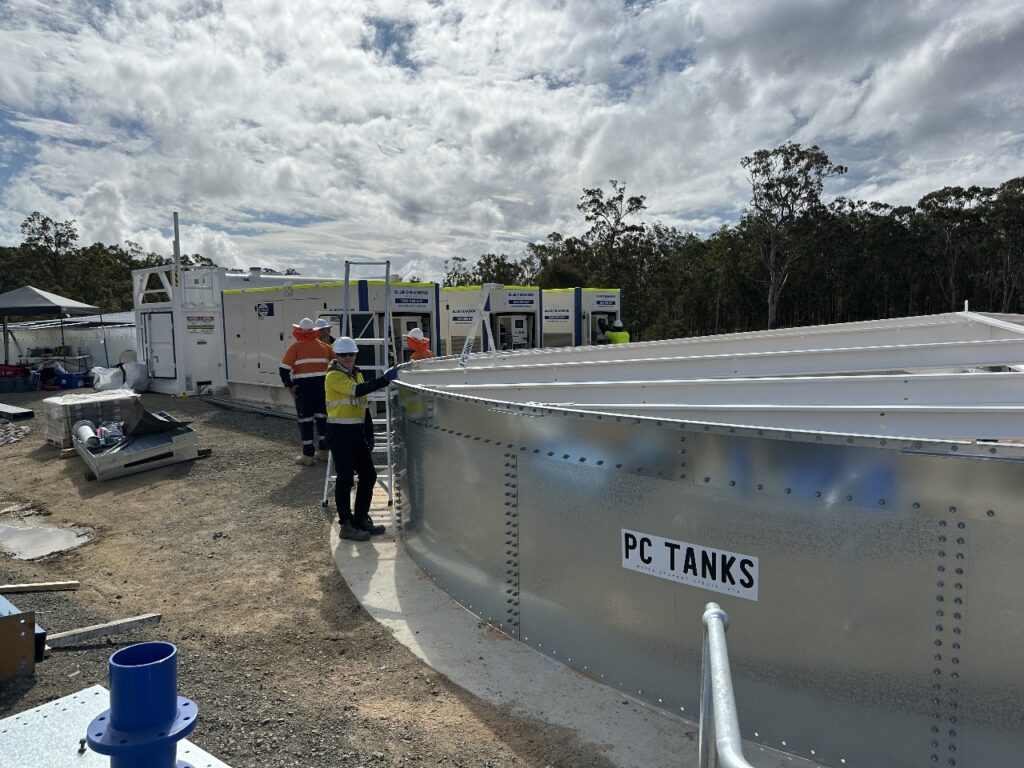
Pacific Water Tanks has seen it all, from mountain-top mines to outback communities. Their experience includes:
Newman, WA – 28ML Tank
A massive 28-megalitre tank was built in a remote, high-temperature region. Required heavy-duty corrosion control, custom access hatches, and a logistics plan that allowed for efficient on-site construction with limited downtime.
Bamaga Community QLD – 6 x 2ML Potable Water Upgrades
In partnership with Queensland Government agencies and NPARC, Pacific Water Tanks installed reinforced RPVC liners into six ageing town reservoirs. Each project included structural validation, stakeholder management, and environmental protections, all in remote Cape York locations.
Chinchilla, QLD & Warrabinda, QLD
Tanks upgraded with new liners and coatings in rural towns to restore compliance and extend lifespan without needing full rebuilds.
How Pacific Water Tanks Tackles Harsh Sites
1. Rugged Materials for Rough Environments
- Stainless Steel (304/316): Resistant to rust, high heat, and chlorides
- Modular GRP Tanks: Lightweight yet strong; ideal for remote potable and process water
- High-grade RPVC Liners: Provide chemical resistance and protect internal walls
- UV-resistant coatings: Essential in high-sun exposure zones
Each tank is matched to its environment, not just built to spec, but built for survival.
2. Advanced Remote Inspection Tools
In harsh or restricted-access sites, Pacific Water Tanks uses:
- ROV (Remotely Operated Vehicle) underwater drones
- UAV (drone) roof and external inspections
- Ultrasonic testing for wall thickness
This means clients get full tank diagnostics without draining, dismantling, or sending people into confined spaces.
3. Structural Assessment & Life Extension
Many harsh-environment tanks are ageing and corroding. Rather than replace, Pacific Water Tanks can:
- Add structural plates and bracing
- Recoat internal and external surfaces
- Install new hatches and safety ladders
- Fit new liners that add 10+ years of life
This approach is faster, cheaper, and more sustainable than demolition.
4. Project Planning Built for Isolation
Pacific Water Tanks brings:
- Pre-fabricated modular tanks for easy transport
- Fully equipped mobile crews with regional experience
- Safety and environmental systems for high-risk areas
- Tight coordination with local councils, site managers, and Indigenous communities when required
Whether it’s installing in the Top End or lining a tank in an inland power station, they work with your conditions, not against them.
Did You Know?
Your Survival Checklist for Harsh Environments
Use modular or pre-fab tank designs
Install RPVC or GRP liners
Match tank materials to site
Budget for long-term maintenance
Easier and faster to transport and install
Critical for corrosion prevention
Use drones and sensors to avoid shutdowns
Don’t use mild steel in salty or chemical-rich zones
Cheaper than sudden failures in remote locations
Remote and rugged locations are some of the hardest places to manage water storage, but with the right planning, materials, and expertise, your tanks can go the distance.
Pacific Water Tanks doesn’t just install tanks, they engineer resilience. Their work keeps communities hydrated, miners operational, and fire systems ready.
So if you’re working in a remote area or extreme climate, ask yourself:
Is your water storage built for where you are or just built?
Need to upgrade or inspect your tank in a remote or harsh environment?
Let Pacific Water Tanks design a solution that lasts.
Book your free consultation today and get a site-specific plan that works in the real world, not just on paper.